
Key Takeaways
- The SNATCH ANPR camera detects the vehicle as it enters the lane. LPR and ANPR refer to the same vehicle identification technology, used to automate access, billing, and security in Malaysian car parks without tickets or access cards.
- Detection involves five stages: image capture, plate localisation, character segmentation, OCR reading, and database lookup — completed in under 3 seconds per vehicle.
- Camera quality is the most critical factor: resolution, night vision, IP rating, and Malaysian plate format training all directly affect read accuracy.
- Modern ANPR systems achieve over 98% read accuracy under normal conditions when correctly specified and installed.
- LPR removes the need for tickets, access cards, or manual gate operation, reducing queuing and manpower costs across all car park types.
- Future development includes AI-enhanced recognition, multi-lane detection, and integration with smart city mobility platforms.
With urban growth and rising vehicle ownership, Malaysia’s car parks face increasing pressure to operate efficiently without proportional increases in staffing costs. Malaysia now ranks as the 2nd highest car-owning country in Asia, with approximately 535 cars per 1,000 people in 2025. This high vehicle density makes automated parking solutions not just convenient but operationally necessary.
Licence Plate Recognition (LPR), also known as Automatic Number Plate Recognition (ANPR), is the technology enabling the next generation of Malaysian car parks: ticketless, cashless, and largely unmanned. This guide covers how the technology works at a technical level, what to evaluate when selecting cameras for your facility, how LPR compares to other access control methods, and answers to the questions operators ask most often.
What Is an Automated Licence Plate Recognition System?
An Automatic Number Plate Recognition (ANPR) system, also referred to as Automatic Licence Plate Recognition (ALPR) or simply Licence Plate Recognition (LPR), is a combination of hardware and software that captures vehicle registration numbers and converts them into digital data. This data is then used for automated access control, billing, permit verification, or parking enforcement.
In Malaysia, these systems are increasingly used across:
- Shopping malls and retail parks
- Residential complexes and condominiums
- Corporate office buildings and business parks
- Hospitals and healthcare facilities
- Universities and educational campuses
- Government and public transportation hubs
LPR systems not only improve operational efficiency but also provide valuable insights into parking patterns, peak hours, and occupancy trends, enabling data-driven decisions for facility operators. Research on Malaysian licence plate recognition using convolutional neural networks has demonstrated that systems trained on local plate datasets significantly outperform generalist international models on Malaysian-format plates.
Key Components of an LPR / ANPR System
A robust LPR/ANPR system typically consists of:
- ANPR cameras: High-resolution cameras with infrared illumination, positioned at entry and exit lanes to capture plate images at vehicle approach speed.
- Image processing software: Converts camera frames into readable plate text using optical character recognition (OCR), returning a confidence score for each read.
- Management database: Stores registered plates, season pass holders, blacklisted vehicles, and access rules. Updated remotely in real time.
- Barrier gate controller: Receives open/close signals from the processing software, typically within 1–2 seconds of a successful plate read.
- Operator dashboard: Provides live monitoring, access event logs, occupancy data, and reporting tools.
- Optional cloud connectivity: Enables remote management, multi-site monitoring, and integration with payment and building management platforms.
How Licence Plate Detection Works in Parking
When a vehicle approaches a car park entry gate, a multi-stage process is completed in typically under 3 seconds. Understanding these stages helps operators evaluate camera specifications more precisely and diagnose read accuracy issues when they occur.
1. Image Capture and Pre-Processing
The camera captures one or more high-resolution frames as the vehicle enters its field of view. Software immediately applies contrast enhancement, noise reduction, and white balance adjustment. These corrections are especially important in Malaysia’s conditions: high-glare equatorial sunlight, low ambient light in basement car parks, and the uneven fluorescent lighting typical of covered entry lanes.
2. Plate Localisation
The pre-processed image is analysed to locate the plate region within the frame. Modern systems use deep learning models trained on large plate image datasets to identify the rectangular plate area, even when it is at a slight angle, partially obscured by dirt, or in non-ideal lighting. The system isolates this region for character-level processing.
3. Character Segmentation
Within the plate region, individual characters are separated from the background and from each other. The algorithm accounts for plate font, character spacing, and interference from plate frames, mounting bolts, or physical damage to the plate surface.
4. Optical Character Recognition (OCR)
Each segmented character is matched against a character library to produce a text string (for example, “WUV 1234”). The system assigns a confidence score to the overall read. If confidence falls below a set threshold, the system may capture an additional frame or flag the event for manual review.
5. Database Lookup and Access Decision
The plate string is queried against the facility’s database: Is this vehicle registered as a season pass holder? Is it an approved visitor? Is it on a blacklist? Based on the result, a signal is sent to the barrier gate to open, deny entry, or trigger an alert to the operations team.
Malaysian Plate Variations
Reliable ANPR performance on Malaysian roads requires the OCR engine to handle the country’s specific plate formats. Systems trained specifically on Malaysian datasets perform meaningfully better than those optimised for European or US plates.
Malaysian Licence Plate Formats
Standard private vehicles: Black characters on white background. The most common format; all standard ANPR systems are optimised for this.
Commercial vehicles: Black characters on yellow background. Requires the ANPR engine to handle inverted colour contrast correctly.
Personalised plates: Custom formats with varying character spacing, font choices, and character counts. More challenging for character segmentation.
Temporary / contractor plates: Paper-based plates common on construction vehicles. Inconsistent production quality makes these harder to read reliably.
The Problem LPR Solves in Different Malaysian Facilities
LPR addresses a different core problem depending on the type of facility. Understanding this helps operators evaluate which capabilities matter most for their specific context.
Shopping Malls: The Peak Hour Bottleneck
The main challenge in high-footfall retail car parks is not average daily traffic but peak-hour surges. On weekends and during major promotions, vehicle throughput can spike 3 to 4 times the weekday average. A manual ticketing system with a fixed issuance rate becomes a hard capacity ceiling during these spikes — creating queues on access roads and negative first impressions before customers even enter the building. LPR removes this physical bottleneck by eliminating the stop-and-take action at entry entirely. The gain is not just speed; it also means the entry lane can handle higher throughput without additional lanes or staff.
Residential Condominiums: The Visitor Management Gap
For residential properties, the recurring frustration is visitor access. Residents are easy to manage with a registered plate list. The problem is everyone else: delivery drivers, maintenance contractors, short-term guests, and family visitors who arrive at different times and cannot be anticipated. Without LPR, this creates pressure on the guardhouse to visually verify and manually log every non-resident vehicle, which does not scale. LPR enables residents to pre-register visitor plates remotely, set time-bound access windows, and generate an audit trail of every vehicle entry without guard intervention.
Corporate Offices: The Invisible Permit Problem
Physical parking permits in corporate environments are prone to sharing, loss, and administrative overhead when staff turn over. The process of issuing, replacing, and deactivating physical cards or stickers often falls on building management teams who are not primarily responsible for parking. LPR converts this into a database operation: adding or removing a plate from the approved list takes seconds, applies immediately, and leaves a clean record. For multi-tenant office buildings where each tenant manages their own parking allocation, this administrative simplification has measurable value.
Hospitals and Campuses: Non-Stop Operations Without Non-Stop Staffing
Hospitals operate 24 hours a day, seven days a week. Staffing a guardhouse around the clock purely for car park access is a high cost that scales poorly. At the same time, hospitals cannot compromise on access reliability — emergency vehicles, on-call staff, and shift workers need frictionless entry at 3am as much as during the day. LPR handles this without requiring continuous human oversight. The same logic applies to university campuses managing thousands of student, staff, and visitor permits across multiple lots and shifts.
The cumulative scale of this demand is significant. KLIA alone handles up to 45,000 vehicles at its kerbsides daily, with as many as 5,000 during peak hours. Managing access, billing, and flow at that volume requires automation not as a convenience, but as a structural necessity.
Advantages of ANPR and Licence Plate Recognition Systems in Car Park Operations
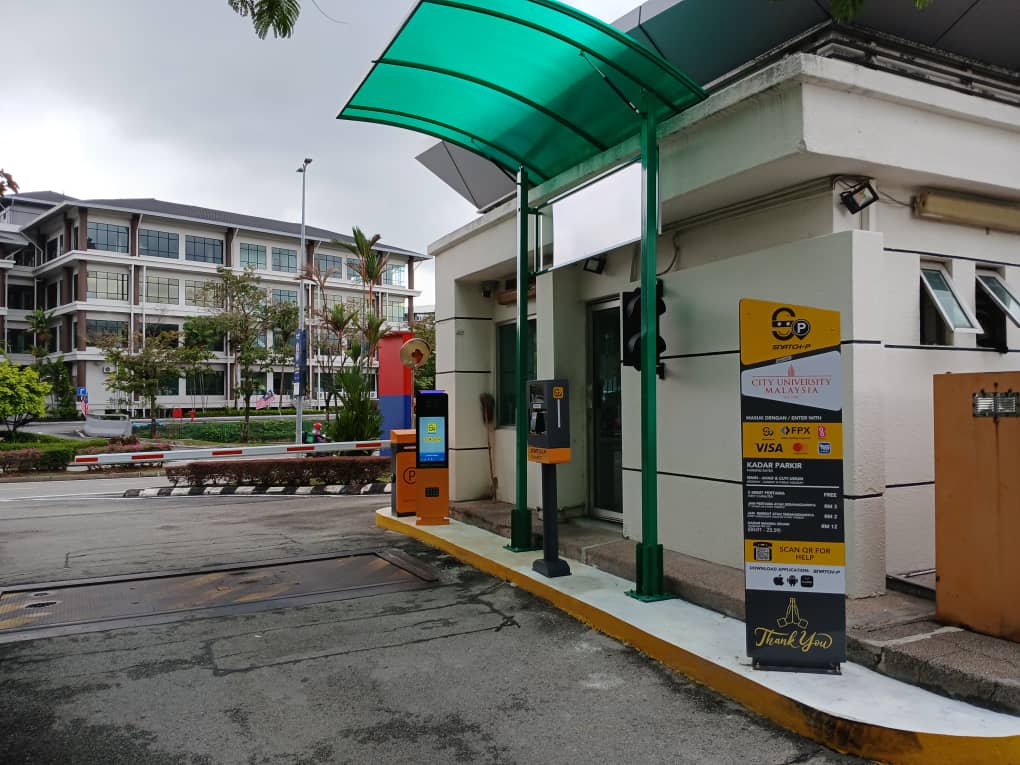
LPR improves parking efficiency, security, and operational oversight simultaneously. Key operational advantages include:
- Reduced queuing: No stopping to take a ticket or tap a card. Vehicles move through the gate without any manual interaction from the driver.
- Lower staffing requirements: Routine access control is handled automatically, freeing staff for higher-value tasks including enforcement and customer service.
- Prevention of revenue leakage: Automated billing tied to plate data eliminates ticket loss, ticket switching, and manual underpayment, a significant issue in high-volume ticketed car parks.
- Improved security: Plates linked to blacklists or flagged vehicles trigger real-time alerts without requiring staff to visually check each vehicle at the gate.
- Data for operational decisions: Entry and exit logs, peak hour profiles, and occupancy rates give operators the information to adjust pricing, staffing, and capacity policies with evidence.
- Integration with payment and management platforms: Modern ANPR systems output structured data that feeds directly into parking management software, cashless payment platforms, and multi-site reporting dashboards.
Why Low-Cost LPR Cameras Fail in Malaysian Car Parks
The most common cause of poor LPR read accuracy in Malaysian deployments is not the software. It is the camera. Budget cameras repurposed from general CCTV use fail in three predictable ways that a controlled demo will not reveal. Understanding these failure modes helps operators evaluate hardware proposals before committing.
Hardware failure from Malaysia’s climate
Entry gate cameras are exposed to heavy rain, high humidity (averaging 80–90% year-round), and intense UV. Cameras without at least an IP66 weatherproofing rating develop internal condensation and corroded connectors within months of outdoor installation. A camera that works on day one can be producing degraded images by month six. Check the IP rating, not just the price. For any exposed or semi-exposed position, IP67 is the appropriate minimum.
Plates washing out from headlights at night
At night, a vehicle’s headlights create extreme contrast in the same frame as the plate. A camera without Wide Dynamic Range (WDR) technology will expose for the headlights, leaving the plate dark and unreadable, or expose for the plate, leaving the frame blown out. This is one of the most frequent complaints from Malaysian operators who installed non-specialist cameras: high read accuracy by day, unreliable reads after dark. WDR is not a premium feature; it is a baseline requirement for any entry gate facing vehicle headlights.
Wrong focal length for the actual lane geometry
Camera specifications are often quoted for a “standard” lane geometry that does not match the physical reality of many Malaysian car parks, particularly older or basement facilities with tight turns, low ceilings, or angled approaches. A camera with the wrong focal length placed at an incorrect distance from the stop line will produce images where the plate occupies too small a portion of the frame for reliable OCR. A proper installation should include a site assessment that confirms camera positioning against the actual lane dimensions before hardware is ordered.
Integrating LPR / ANPR with a Smart Parking Ecosystem
ANPR cameras deliver the most value when integrated with a broader parking management platform rather than operating as a standalone access control device. In a fully integrated setup:
- Entry and exit data from ANPR cameras feed directly into billing software, removing the need for manual ticket processing or validation at pay stations.
- Season pass and visitor management is handled digitally. Operators update plate lists remotely, and changes take effect immediately without issuing or collecting physical media.
- Real-time occupancy dashboards draw from ANPR event data, allowing operators to monitor utilisation across multiple zones or sites from a single interface.
- Security alerts triggered by plate blacklists, extended overstays, or anomalous access patterns can be sent directly to the operations team or on-site staff.
- Revenue management platforms use entry, exit, and occupancy data to support dynamic pricing, utilisation analysis, and financial reporting.
Companies like Snatch Park build full parking ecosystems in which LPR is one component alongside cashless payment terminals, remote operations support, and revenue management software. This integrated approach is increasingly the standard for commercial and institutional car parks across Malaysia, replacing the patchwork of separate systems that characterised earlier generations of parking operations.
6 Questions to Ask Before Signing an LPR Contract in Malaysia
Most vendors will show you a demo that works under ideal conditions. The questions that reveal real-world reliability are the ones buyers rarely think to ask until after installation. Before committing to any LPR provider in Malaysia, ask these six.
Has your system been validated on Malaysian licence plates specifically?
Ask for accuracy data broken down by plate type: standard private, yellow commercial, and personalised plates. A headline accuracy figure is usually measured on standard plates under controlled conditions. The performance gap on Malaysian personalised plates or commercial vehicles is where most generic systems fall short. Require evidence from a real local deployment, not a lab benchmark.
What happens when the car park loses internet connectivity?
Cloud-dependent systems route access decisions through remote servers. When connectivity drops, vehicles can be stranded at the gate or the system defaults to open mode with no access control. Ask whether there is local fallback processing that keeps the barrier operational offline, and how the system handles the backlog of unprocessed entries when connectivity is restored.
How does the system handle plate data under Malaysia’s PDPA?
Under Malaysia’s Personal Data Protection Act (PDPA) 2010, vehicle registration numbers linked to identifiable individuals are considered personal data. Ask where plate data is stored, for how long it is retained, who has access, and what the deletion process looks like. This is increasingly relevant as PDPA enforcement has grown, and it is a question many operators have not thought to raise before signing.
What does the system integrate with beyond the barrier gate?
A standalone LPR camera that only opens a barrier still requires a separate payment station, separate season pass management, and separate reporting. The operational value of LPR multiplies when it feeds into a connected management ecosystem. Ask specifically how the system integrates with cashless payment platforms, visitor pre-registration portals, and multi-site reporting dashboards. Ask for the integration documentation, not just a verbal yes.
Can I see the system running at a comparable active deployment in Malaysia?
Demo environments use clean standard plates, ideal lighting, and controlled vehicle speeds. These conditions do not represent a live Malaysian car park. Ask to observe the system at an active deployment with conditions similar to your facility: the same lighting type (basement or outdoor surface), comparable vehicle volume, and the plate types you expect. A vendor confident in their product should welcome this without hesitation.
What is the support structure after go-live?
LPR cameras accumulate dust and grime over time, directly affecting image quality and read accuracy. Firmware updates, database maintenance, and periodic camera cleaning and recalibration are standard operational tasks, not exceptional events. Ask: what is the response time for hardware faults, is there 24/7 support coverage, what is the cost structure for ongoing maintenance, and who is responsible for camera cleaning. These answers separate vendors with a proper service model from those who sell hardware and move on.
See SNATCH LPR in action at Malaysian car parks
Deployed at shopping malls, condominiums, hospitals, and campuses across Malaysia.
The Future of LPR / ANPR in Malaysian Parking Management
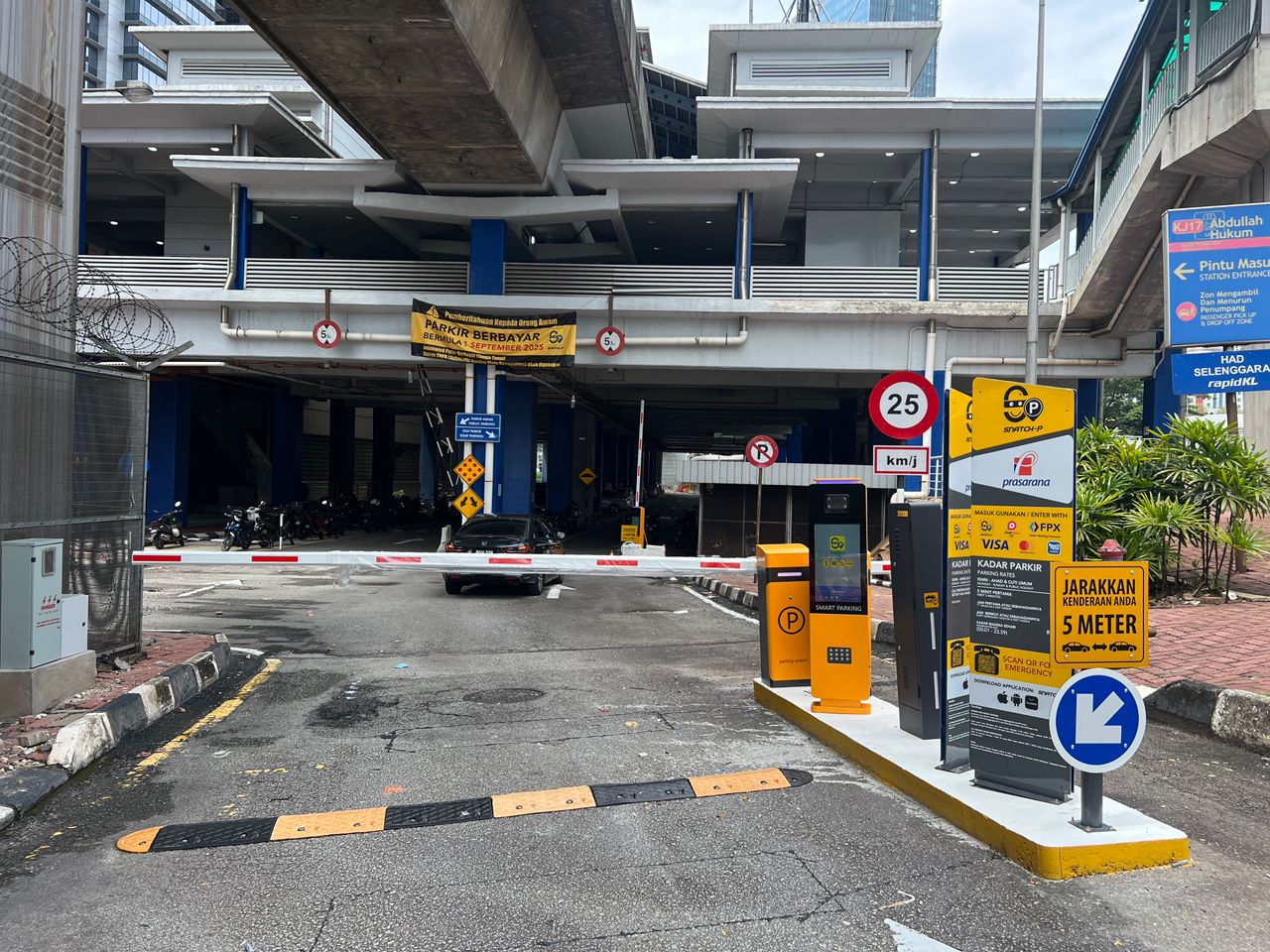
The next wave of LPR development in Malaysia centres on three areas.
- AI-enhanced recognition: Models trained on larger, more diverse datasets are improving read accuracy on non-standard plates, dirty or worn plates, and unusual lighting conditions. AI-based systems can also distinguish plate types and adjust processing parameters dynamically, rather than applying a fixed OCR approach to all inputs.
- Multi-lane and multi-camera integration: As facilities move toward wider entry configurations with two or more simultaneous lanes, ANPR systems must manage concurrent captures without interference. Advances in edge computing allow multi-camera processing at the lane level, reducing latency and infrastructure requirements.
- Predictive analytics and smart city integration: Occupancy data from ANPR systems feeds machine learning models that predict peak periods, suggest dynamic pricing adjustments, and flag anomalies in real time. At a national level, ANPR integration with Malaysia’s smart city and public transport initiatives positions the technology beyond individual car park management, connecting parking data with e-hailing logistics, EV charging allocation, and urban mobility planning.
For property managers and parking operators in Malaysia, ANPR is no longer an emerging technology. It is the operational standard for any facility that takes efficiency, security, and user experience seriously. The question is not whether to adopt it, but how to implement it as part of a connected, data-driven facilities strategy.
Ready to modernise your parking operations? Contact the Snatch Park team to explore LPR and smart parking solutions for your facility.
SNATCH LPR/ANPR Solutions: Deployed at Car Parks Across Malaysia
From shopping malls to residential condominiums. See how Snatch Park’s integrated LPR system works.
References
- Carz. Malaysia Has 2nd Highest Car Ownership Rate in Asia. 2025. Available at: https://www.carz.com.my/webview/2025/05/malaysia-has-2nd-highest-car-ownership-rate-in-asia
- The Star. Smarter Traffic Flow for 45,000 Cars at KLIA Every Day. 2025. Available at: https://www.thestar.com.my/news/nation/2025/11/11/smarter-traffic-flow-for-45000-cars-at-klia-every-day
- Muhamad Faiz et al. Malaysian Licence Plate Recognition Using Convolutional Neural Network. 2021.